[Un]reasonably outraged by cheerleaders, capitalism, and the cult of gratitude
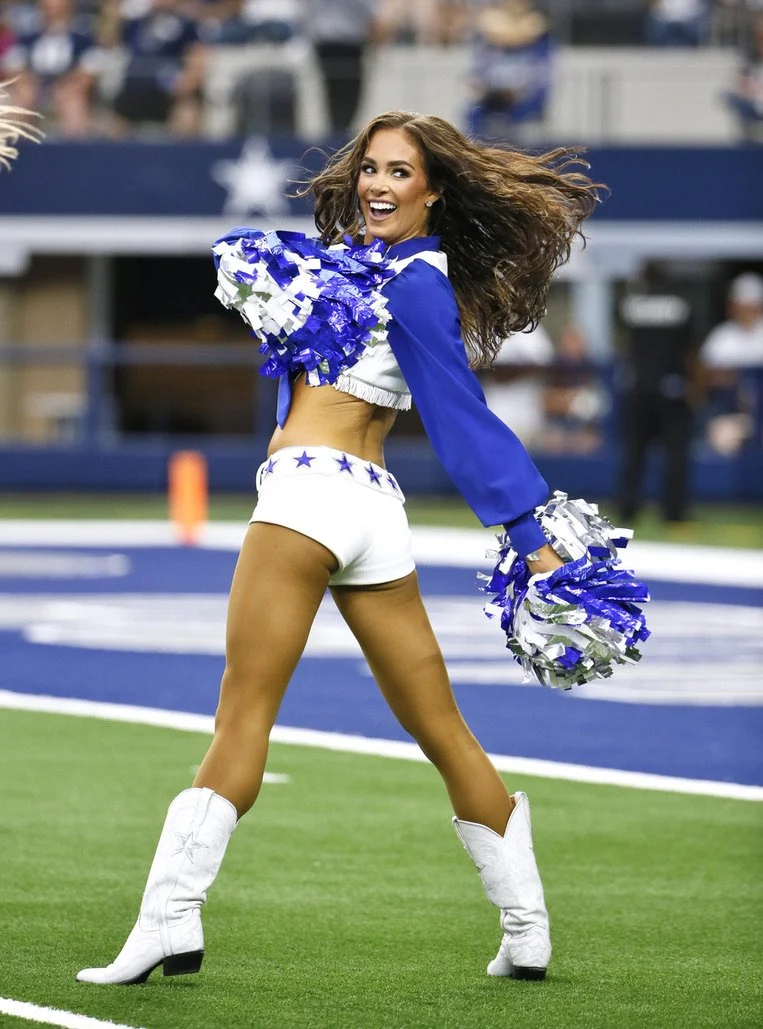
America’s Sweethearts: Dallas Cowboys Cheerleaders is more than a reality show. It’s a glitter-covered exposé of how women’s labour is still sold cheap and called a dream.
I came for the pom-poms, stayed for the rage.
Well, not quite. I’ve never cared about cheerleading. It wasn’t part of my childhood in Australia, and even during three years at an American-style school in Asia when I was a teen, it held no appeal. I don’t follow American football, and I’d always assumed pom-poms were just glittery props for a game that didn’t interest me.
Then, like so many of us caught in the Netflix algorithm, I started watching America’s Sweethearts: Dallas Cowboys Cheerleaders. I expected to cringe my way through an episode then tap out. Instead, I got hooked. And by the end of season two, I was furious.
The Dallas Cowboys Cheerleaders (DCC) aren’t arm-waving extras. They’re elite dancers. They train like Olympic athletes, perform with military precision, and hold themselves to impossible standards all for the privilege of being wildly underpaid by the world’s most valuable sports franchise.
And these ‘specially chosen’ women are expected to keep saying thank you.
Watch the show and you’ll hear it again and again:
‘It’s my dream come true!’
‘I’m so lucky to wear this uniform!’
‘I’d do anything to be part of this!’
It’s a cult of toxic gratitude and it’s not unique to Texas or cheerleading. This is what happens when women’s labour is repackaged as a privilege. We see it everywhere, but it is particularly apparent in the arts. The actor working for ‘credits’, the designer balancing three side gigs, the intern who’s told to be grateful for the experience and the freelance writer offered ‘exposure’ in lieu of payment.
It’s not a coincidence that the people told to be grateful are so often women and that the industries profiting from that unpaid or underpaid work are led by very rich men.
The Dallas Cowboys are a perfect case study. Jerry Jones, now 82, bought the Dallas Cowboys in 1989 for $140 million—an unheard-of sum at the time—forging what would become a US$10 billion empire. The women who help sell that brand, whose faces are on merch, whose bodies fill calendars, whose routines are part of the spectacle, make around $15 to $20 an hour. After rehearsals, appearances, travel, and the unpaid extras, it’s barely enough to cover their fake tan. Though management is quick to list all the ‘freebies’ via sponsored nails, lashes, and hair services. (Ironically, these are all required to maintain the ‘look’.)
These women are brand ambassadors, high-performance athletes, content machines and merchandising icons in one. They’re judged on hair thickness, teeth whiteness, and visible thigh gaps all the while pushed through training camps, expected to perform while injured, and told to stay photo-ready at all times. But when payday comes, they’re at the bottom, while owners, sponsors and male players rake in millions.
Some still dismiss cheerleading as fluff, as if that makes the exploitation easier to stomach. But fluff doesn’t pack stadiums. It doesn’t sell reality TV. It doesn’t dance in perfect sync before 90,000 people and look flawless doing it.
This is labour. Skilled, disciplined, physically brutal labour. The only reason it’s treated as disposable is because it’s done by young women taught that the honour of being chosen is reward enough.
That script plays on repeat in creative worlds, too. Musicians gigging for drink cards. Freelancers ghosted after unpaid features. Actors in profit share shows (which usually means no profit to share). Dancers expected to hustle, keep side jobs, and somehow still feel lucky.
Of course, there will always be someone who shrugs and says ‘well, they chose it’. But choice means nothing if the alternative is having no path at all. These dancers—like all creatives—love their craft, but loving your work shouldn’t mean accepting exploitation for the chance to ‘live your dream’.
So no, cheerleading isn’t my thing, but feminist rage is. And the DCC docuseries is a neon-lit reminder not to mistake crumbs for luck. It’s not lucky to be underpaid. It’s not lucky to have your body policed for profit. It’s not lucky to be the glitter that hides the grind at the centre of so much women’s work.
What enrages me most is how long this has been allowed to stand. In 2025, only now after decades of whispers, lawsuits and media pressure are cheerleaders starting to see fairer contracts. A few brave women stuck their necks out but only in the final episodes does management finally sit down to negotiate.
Good on the women who finally said enough. Good on them for refusing to play nice and for showing the next generation that being grateful should never come at the cost of being paid. It shouldn’t take lawsuits and public outrage to get billionaires to pay the women helping make them rich.
In the end, America’s Sweethearts isn’t a show about pep talks and pom-poms. It’s a cautionary tale about how women’s work—creative, emotional, physical—is still sold cheap. And if we’re not endlessly grateful for the ‘opportunity’, we’re replaced by the next woman who might be.
It’s time to stop applauding the fact we got a seat at the table, or a a gig at the club, or a custom-made star-studded uniform. If our labour builds the empire, we should be paid like we own a piece of it.
And if that makes us less sweetheart, more troublemaker? Good. We don’t need to be grateful.
We need to be paid.
What do you think?
Kylie
x